Things you can actually open
I'd rather show you than tell you, so most of this is live — go and open it. Below is a look at each, with a few glimpses inside. Some is finished, some is an experiment, but it's all the same instinct pointed at different things.
Grounded Ninja

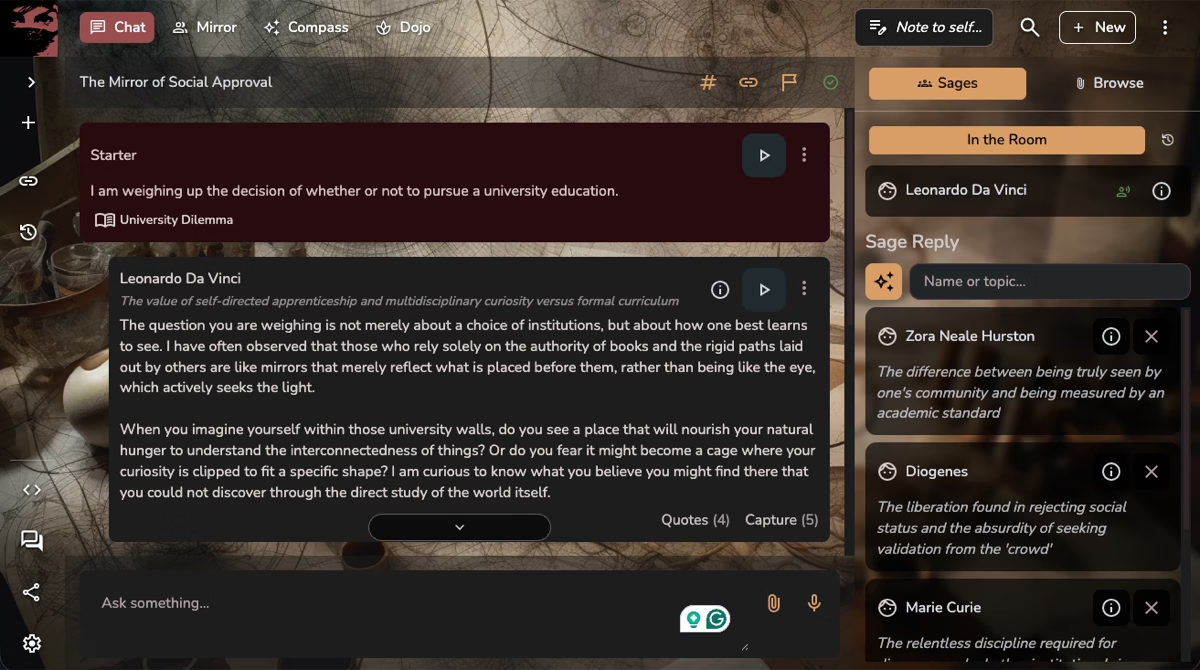
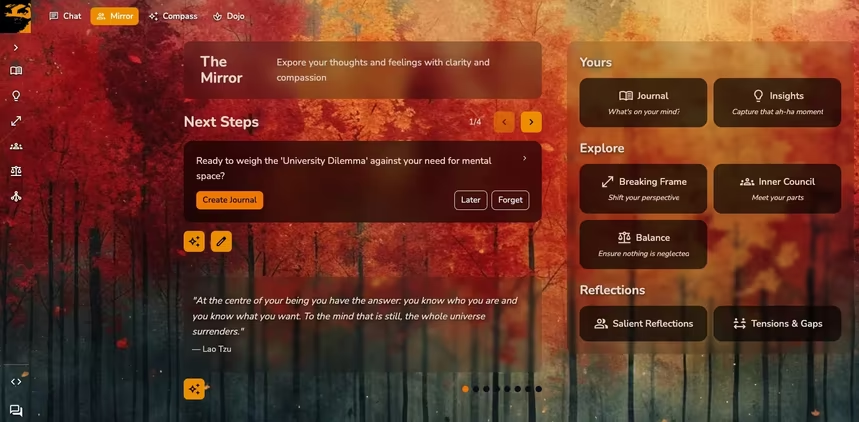
The thing I'm most focused on. An AI reflection tool for people who read philosophy and psychology but struggle to actually live it — which, in my experience, is most of us. You reflect, find direction, and act, in dialogue with AI "sages" that remember your whole journey instead of dispensing the same generic advice to everyone.
I built it to answer a real question: can the mechanisms that make ACT and IFS work in a therapy room survive being put behind a screen? Some do, some don't, and finding out is the interesting part. It was a 2026 venture-competition finalist, currently going through the Brunel incubator.
It's built as one connected loop rather than a pile of features:
- Mirror — reflect. Journalling and the Breaking Frame exercise, to see the patterns you're caught in.
- Compass — find direction. Values, future self, ikigai: what actually matters, not what you think should.
- Dojo — act. Turning an insight into a daily practice, so it lands in the body, not just the head.
- Sages — the thread through all of it. Dialogue with figures who cite your own journals and values back to you.
The mechanisms and the evidence behind each of these live on the research page; this is the short version. It's live — make an account and try a reflection.
Meta-Me

Evidence that the inner-life focus is a current heading, not the whole compass. Meta-Me is a modular system I built to run the work of a one-person enterprise — a network of small, focused apps (a knowledge base, a contact manager, money, health, analytics) talking to each other through a shared agentic layer rather than living in ten disconnected subscriptions.
The honest framing: it's my daily driver and my deepest learning project. Most of what I now understand about agent orchestration, retrieval, and keeping a system coherent over months, I learned by building and living in this. It's available to others, but I won't oversell it — its first job has always been to teach me, and it's very good at that.
JSPA — a granular synth in your browser
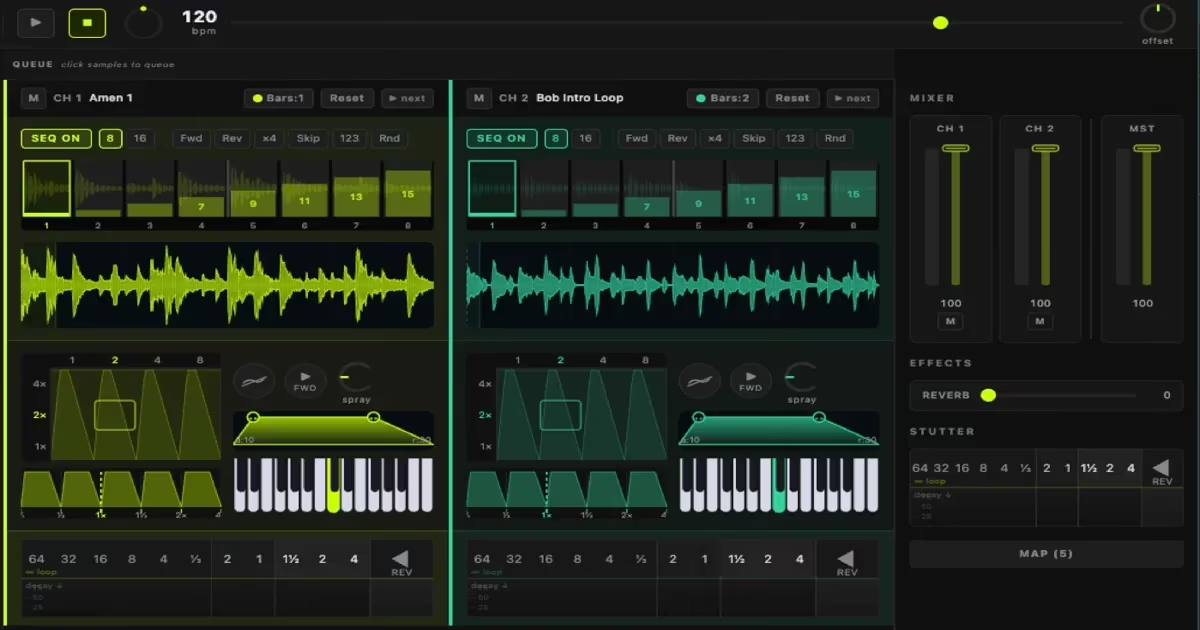
From the other half of my life. JSPA started as Jasper — a MaxMSP patch I built with my brother Ben for our laptop DJ duo, the SuperCasioBrothers: two laptops, a mixer, and a home-made sampler. This is its modern reincarnation, rebuilt from scratch as a browser-native instrument carrying the same spirit.
A two-channel granular sample player with BPM sync and real-time FX, running entirely in the browser via the Web Audio API and AudioWorklet, installable as a PWA. For serious performance it talks to a Bela board for sub-millisecond latency. Drag, pitch, and scrub through grains of sound — best with headphones, and proof the "make things people experience" instinct started in sound long before it found psychology.
English learning games
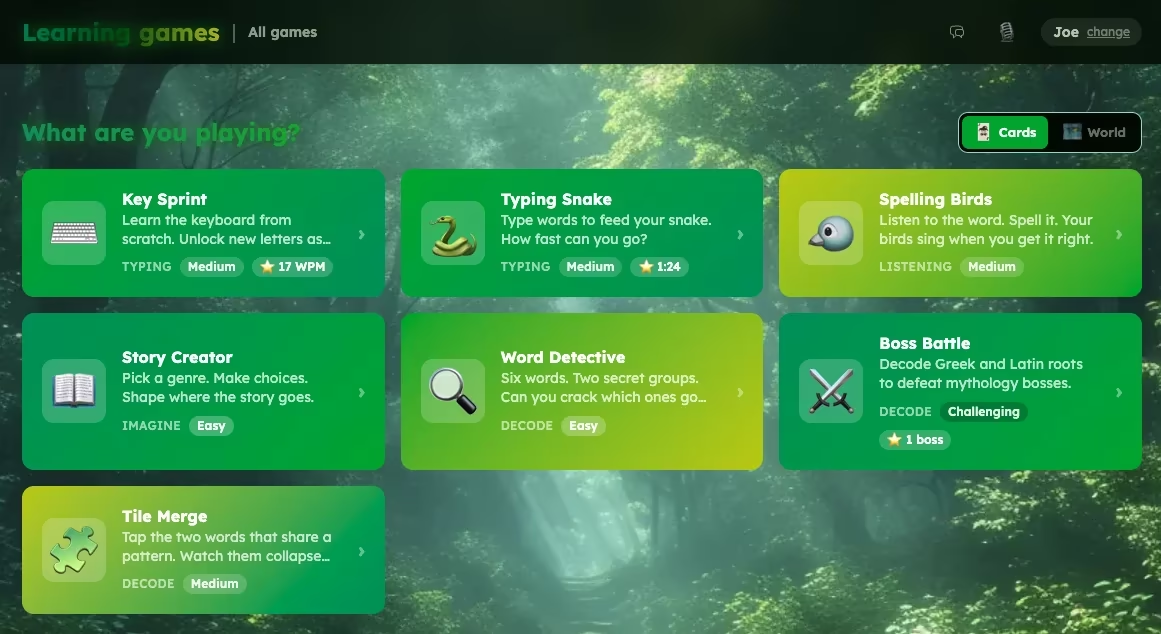
Research-backed games for English learners with dyslexia or ADHD. Seven small games aimed at the specific gaps a standard curriculum assumes you already have — typing fluency, listening and spelling, morpheme decoding — plus an AI story creator. The design follows the research on morphological awareness (by around age ten, morpheme instruction outperforms phonics alone for struggling readers), and deliberately avoids streak mechanics, which tend to produce anxiety and shame spirals in neurodiverse learners rather than motivation.
agentic-ifs
A smaller, more speculative one. An open-source Python library that models Internal Family Systems as a multi-agent architecture — parts as agents, Self as an attractor state. It's a thought experiment in code more than a product: a way to think precisely about psychological structure — a science project, really, with a technical write-up in the works. MIT-licensed and properly tested, if you'd like to read how I reason about both halves at once.
What I build with
The toolkit behind all of it, if you're the sort who likes to know before asking:
Want the thinking underneath rather than the things themselves? That's on the research page. Or just say hello.